From Ancient Craft to Living Brotherhood
Etoile Polaire Lodge No. 1 Masonic History
Over a thousand years of tradition. More than two centuries at the heart of our community.
"Freemasonry is a system of morality and virtue, veiled in allegory and illustrated by symbols."
— Traditional Masonic Definition
Freemasonry is the world's oldest and largest fraternal organization. Its history spans continents and centuries, weaving through the great events of Western civilization — the building of cathedrals, the birth of nations, the age of Enlightenment. At its heart is a simple and enduring idea: that men, bound by shared principles, can make themselves and their world better.
The Ancient Craft
From Stone to Symbol
The story of Freemasonry begins with the builders of the ancient world. The medieval stonemason guilds of Europe were among the most sophisticated professional organizations of their age. These men — who raised the great cathedrals of Chartres, Canterbury, and Cologne — organized themselves into lodges where they shared knowledge, protected trade secrets, and cared for one another.
Their working tools became symbols of moral instruction. The square taught rectitude of conduct. The compass taught the importance of boundaries. The plumb line taught uprightness of character. When the operative craft gave way to the speculative fraternity in the early 18th century, these symbols were carried forward — transformed from tools of stone into instruments of moral philosophy.
Origins
The Operative Craft
Through the Ages
A History in Milestones
~1000 AD
The Operative Masons
The roots of Freemasonry trace to the medieval stonemason guilds of Europe. These skilled craftsmen — who built the great cathedrals and castles of the age — organized themselves into lodges for mutual protection, education, and the preservation of their trade secrets. Their tools: the square, the compass, and the plumb line.
1717
The Grand Lodge of England
On June 24, 1717, four London lodges united to form the first Grand Lodge, transforming Freemasonry from an operative craft into a speculative philosophical fraternity. Membership opened to men of all trades and professions, united not by stone but by shared moral principles.
1730–1770
Freemasonry in the New World
Freemasonry spread rapidly to the American colonies. By the eve of the Revolution, lodges flourished in every major city. Among the Founding Fathers, Masons included George Washington, Benjamin Franklin, and Paul Revere — men who carried Masonic ideals of liberty, equality, and fraternity into the founding documents of a new nation.
1794
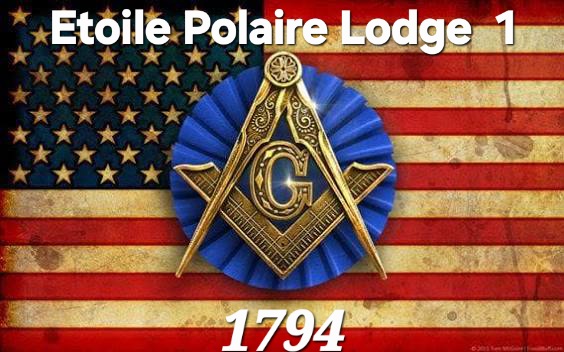
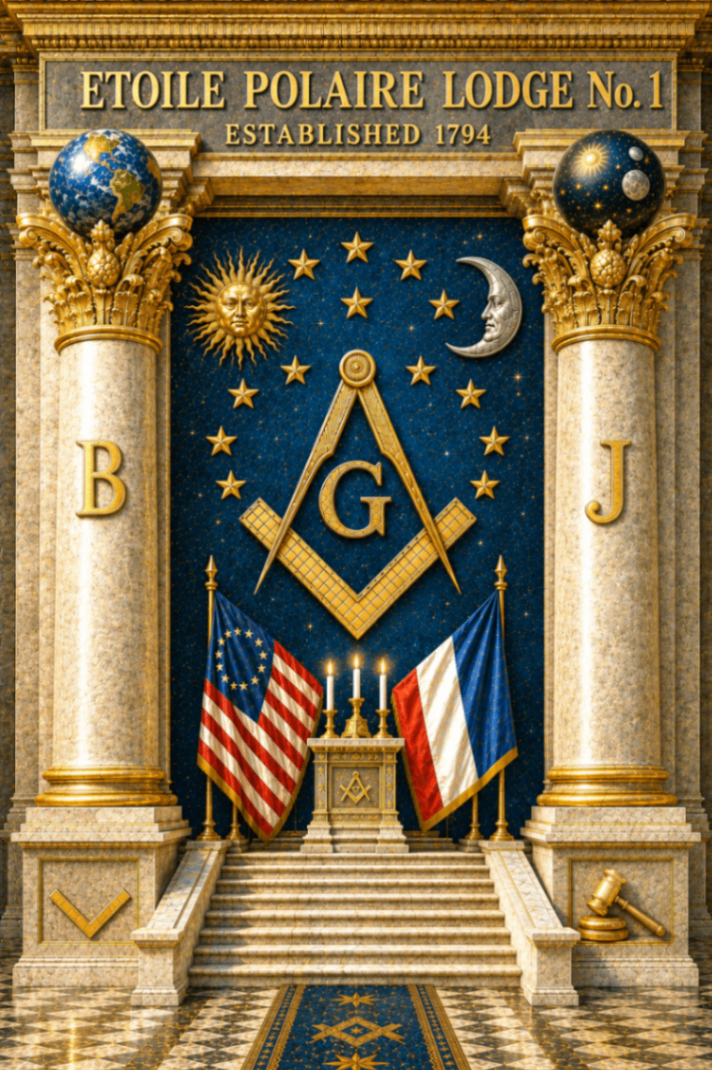
Étoile Polaire Lodge No.1 is Founded
In the young republic, a group of men of character and vision gathered to charter Étoile Polaire Lodge No.1 — "The North Star." Named for the constant star that guides travelers through darkness, the lodge was founded on the Masonic tenets of Brotherly Love, Virtue, and Truth. Its doors have remained open ever since.
1800
Chartered
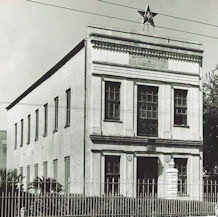
In 1794, Brothers from our sister lodge in France traveled to New Orleans and established what would become Etoile Polaire Lodge, one of the oldest Masonic traditions in Louisiana. A charter was requested from the Grand Orient of France and approved, but due to war in Europe, the Brethren did not learn of its issuance for many years. In 1811, they petitioned the Grand Lodge of Pennsylvania for a charter, which was granted. Following the formation of the Grand Lodge of Louisiana in 1812, a new charter was issued, and the lodge became Etoile Polaire Lodge No. 5, taking its place among the founding lodges of Louisiana Masonry.
1900
Enduring Through Change
Two world wars, the Great Depression, and sweeping social change tested every institution in America. Étoile Polaire Lodge endured. Members served their country in uniform and returned to serve their community in lodge. The fraternity adapted while holding fast to its ancient principles.
Today
A Living Legacy
More than 230 years after its founding, Étoile Polaire Lodge No.1 continues to meet, to initiate new brothers, and to serve the community. The tools have changed; the principles have not. We remain a lodge of men committed to making good men better — and to being a constant star in an uncertain world.
Brothers in History
Notable Freemasons
Throughout history, Freemasonry has counted among its members some of the most influential figures in science, politics, arts, and exploration.
George Washington
1st U.S. President
Benjamin Franklin
Founding Father & Scientist
Wolfgang Mozart
Composer
Winston Churchill
British Prime Minister
Paul Revere
Patriot & Silversmith
Voltaire
Philosopher
John Glenn
Astronaut
Mark Twain
Author
Become Part of the Story
The history of Étoile Polaire Lodge is still being written. Every brother who joins adds his chapter to a story that began in 1794 and continues today.